

Our worship services are prerecorded and posted on RPC YouTube channel and Facebook page.
Join us every Sunday at 10 am and let’s worship God together!
Click here for PDF version:“ON THE WILDERNESS ROAD”
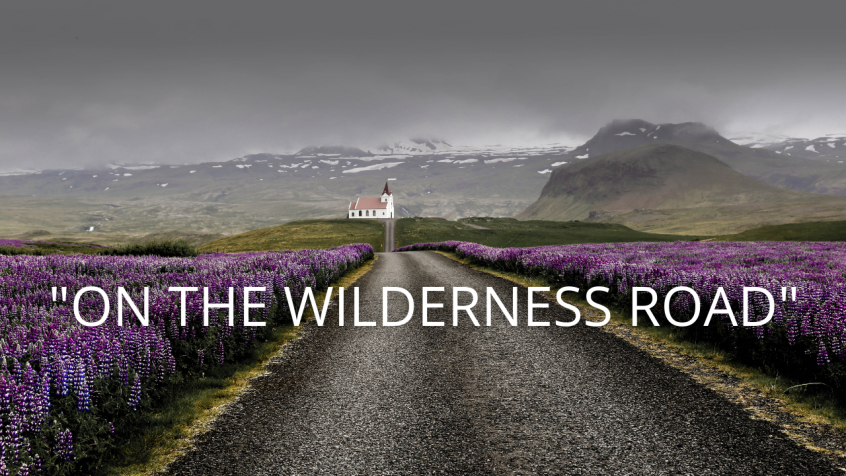
“ON THE WILDERNESS ROAD”
Acts 8:26-40
(05-02-21)
Rev. Victor Kim
Today’s reading from scripture involves one of the leaders of the early church, a man named Philip, and his encounter with an Ethiopian eunuch. In order to get the full context of what’s going on, we need to backtrack a couple of chapters in the book of Acts. Jesus had risen and had appeared to his disciples. Filled with the Holy Spirit, the disciples began to preach the message of the risen Christ in and around Jerusalem and especially in the temple. The fellowship of Christ followers grew and they shared their resources with one another, so that no one among them had need. The Jewish authorities grew suspicious and wary of this new movement, but though arrested, imprisoned and flogged, the apostles would not stop teaching and proclaiming Jesus as the Messiah.
As their numbers grew, it became clear that more people were needed to help serve the needs of the burgeoning community. Seven men were chosen from within the community, men of good standing, full of the Spirit and of wisdom. Among those men was one named Philip who went to the city of Samaria and proclaimed the message of Jesus. Through his preaching and healing, many in the city came to believe and were baptized. Even a magician named Simon in the city came to faith in Jesus through Philip’s teaching. Hearing of this amazing growth in faith, Peter and John, two of the lead apostles, came to Samaria and added their gifts to the work that Philip had been doing there.
So what you have in Philip is an up and comer in the young church. He is a rising star. He had been identified as someone who possessed the desired gifts for leadership. In Samaria, Philip’s success in ministry had shown that the discernment that others had made about him was well founded. In business terms, he would have been targeted for rapid advancement to the executive team. In the modern church, he would have been noticed and the big churches would have kept their eyes on him, waiting for the right time to offer him the right opportunity. So it’s kind of interesting to read what happens next to Philip. He doesn’t get a call to the big city, he doesn’t move up to the corner office, instead, an angel of the Lord tells him to go south to the road that goes down from Jerusalem to Gaza. And just in case we don’t quite understand what that means, the text tells us that this was a wilderness road. It’s a desert road, off the beaten path, far from the fast track of expectation. It would be like a first round draft pick of the Vancouver Canucks expecting to get a call to join the big team, and instead being told, we’d like you to put in some time in Utica with the farm team.
So, here’s Philip, on the wilderness road, but he’s not alone. There’s an Ethiopian eunuch, returning home from Jerusalem, where he had gone to worship. The scene poses a lot of questions. My first question is, “What was this Ethiopian eunuch doing going to worship in Jerusalem?” He’s Ethiopian, most likely not a Jew, so why go to Jerusalem? Well we know that he was a court official of Candace, the Queen of the Ethiopians, actually in charge of her entire treasury, so perhaps in his high ranking position, he had come into contact with Jewish officials who had visited the Queen. And maybe he had heard something about their religion and found it compelling. But there’s a problem. He’s a eunuch. Eunuchs were not permitted to participate in Temple rituals and he would not have been allowed in the assembly of the Lord. In other words, even if he had gone to Jerusalem, he would not have been allowed into the temple.
But what’s clear is that this man is a seeker. Despite the restrictions he faced, he was searching for something. He was looking for something in his life and on that wilderness road, he sat there in his chariot reading a book he didn’t understand. He was reading from the prophet Isaiah, reading but not comprehending. The Spirit of God told Philip to go and join this chariot, and Philip does. “Do you understand what you’re reading?” he asked the Ethiopian. “How can I, unless someone guides me,” came the reply. Joining the chariot, Philip explains the text about the suffering servant in Isaiah, which the Ethiopian was reading, and he told the eunuch that this was about Jesus. Then Philip proceeds to share the rest of the good news about Jesus, and the eunuch believes what he is told, he is transformed, so much so that when they came to some water, the eunuch declares that there was nothing which would prevent him from being baptized. And so Philip baptizes the Ethiopian eunuch right there and then, before the Spirit whisks Philip away from the wilderness road, as suddenly as he was told to go there.
This story is a story of inclusion for the Ethiopian eunuch. Restricted, not only from the rituals of Temple worship, but even participation in the assembly of the people, this eunuch now is baptized and belongs fully to the family of God. This is anticipated in the prophet Isaiah who speaks of a time when eunuchs who keep the commands of God and hold to God’s covenant will receive a name better than sons and daughters, a name that will endure forever. The story told in the Book of Acts is one where God extends God’s embrace, whether to the Gentiles or to eunuchs. God is moving, even on the wilderness road. But there is an invitation to the church to move with God where God is, where God may be inviting us to go.
We understand that each successive generation in our culture is less and less familiar with the church and with the Christian story. Biblical scholar Marcus Borg taught a course in New Testament at Oregon State University for many years. The students who signed up for that course often showed an absolute ignorance of even the basic core beliefs about the bible and Christianity. Borg started to ask his students to write a short essay on their exposure to Christianity and the bible. Did you grow up in a church, and whether you did or didn’t, what have you heard about the bible and Christianity? What’s your impression? Here’s some of what he read and learned. “I don’t know much about the bible, but I think there’s a story in it about a guy and a fish.” “I don’t know much about Christianity, but I think that Christians are really against trespassing.” Many had never been to a church service except for a wedding or funeral, and not all had experienced even that. More than half described Christians as literalistic, anti-intellectual, judgmental, self-righteous and bigoted. One who had never been to a Christian worship service happened to attend what may have been the only snake handling church in Oregon. He said that he hadn’t known that Christian worship included snakes, and he thought that was pretty interesting. Borg concludes that the problem wasn’t the intelligence of his students, but that they were harbingers of a future that is becoming more and more present and the problem isn’t just that the bible and Christianity are often misunderstood, but that distortion and serious misunderstanding have often taken over.
And yet the good news is that these students were still signing up for an introductory course on the New Testament. We live in a culture full of Ethiopian eunuchs, people who are unfamiliar with the Christian faith, but many who are spiritual seekers. I serve on the Board at Vancouver School of Theology and I can report that enrollment has never been as high as it has been recently. People want to learn and connect and have a sense of meaning and purpose in their lives. The problem is that for many of these seekers, those who don’t sign up for theology courses, no one has helped them to understand what they are searching for. Instead they are left to form their own opinions based often on inaccuracies and extreme views. Do they understand what they read about Jesus, what they hear about the church,what they watch on TV or the internet about Christians? How can they unless someone guides them? If we as the people of God will not engage with our culture and speak passionately, purposefully and lovingly of the good news of Jesus Christ, why would we be surprised that so much of our society has a negative or inaccurate view of Christians and the church?
We used to live in a culture where we could expect people to have a faith background, even if they didn’t truly practice the faith with any particular discipline. But that expectation no longer holds. Our elders have been reading a book written by two professors at VST, Ross Lochhart and Jason Byassee, called Better than Brunch, about Missional Churches in Cascadia, this region of North America that encompasses cities like Vancouver, Seattle and Portland. The third chapter is entitled, “All the Sacred Cows (and Great Preachers) are Dead.” It comes from a story told by Stephen Farris, the former Dean of St. Andrew’s Hall, when after preaching at a certain “high steeple” church, a parishioner shook Stephen’s hand and said to him gravely, “all the great preachers are dead.” Clearly he was wrong, since Stephen was standing in front of him, but his point was made. We no longer live in a culture which is Christian so that the church only needs to fill the pulpit with a great preacher who could hold the congregation spellbound by his, and usually it was ‘his,’ oratory, and everything else would be fine. Our culture and our current generation, not only here in Cascadia, but in more and more places, don’t take what’s preached to them as truth, they need to experience it for themselves. So, who will help the seekers and searchers to understand what they experience and put it into perspective without forcing them into a structure they no longer accept?
The early church understood these challenges as well. They also lived in a pluralistic society where their views were considered strange and exclusive. Yet they persevered, they would not be silenced, they could not stop sharing the good news of Jesus Christ and the love of God. So maybe it’s the message. I grew up with a Christianity surrounded by rules, by guilt and by fear. You lived a careful life of restriction and caution because if you veered off the narrow road, you might be punished by an angry God. But the essential message of the gospel has always been one of God’s love for creation, for humanity, and God’s desire for us to know the fullness for which we were created. We have to remind ourselves that this is the original message of the gospel, a message of hope, of God’s relentless love and compassion, of finding our place in, and working together for, the realization of the kingdom of God Jesus spoke of, not in some distant future, but in the hear and now.
This was the message that the early church understood and shared. This was the good news that they were unafraid to be persecuted for, the gospel that they could not keep silent about. The love of God for God’s creation, a love embodied in the incarnation of God in Jesus Christ, a love that taught of God’s redemption, restoration and renewal, this is good news, this is news that deserves to be shared. This is news that none of us ought to be embarrassed to share, with family, with co-workers, with neighbours, with strangers.
The church today finds itself on the wilderness road. For centuries the church has believed in the inevitability of continued growth, that as we spread the message of the gospel, more and more people would come to faith. But clearly our plans have been derailed, and they have been derailed by God. But as always with God, there’s a plan for what God does. If we have been directed to the wilderness road, it is because there is a need for the church and for Christians to share our faith, to share the good news of God’s love in Jesus Christ, with those whom we find on this wilderness road. There are Ethiopian eunuchs everywhere, people who are spiritual seekers, who read books on spiritual direction, on theology, on finding purpose and meaning in life, yet who don’t understand because no one has come alongside them, to guide them. It is the church’s time to intentionally and imaginatively re-engage with our culture, to stop letting a few, and often extreme examples, define our faith for our culture, and take upon ourselves the vital task of sharing the love of God for all people in Jesus Christ. But you know what the really unexpected thing is? We think that by our evangelism, by our mission, our witness and sharing, that we will help others to change, but the truth is that as we engage others with the good news of the gospel, we will be changed ourselves.
Think about Philip. He was a Jew. Though he was a follower of Jesus Christ, he was still rooted in the laws and regulations of his culture, his tradition. His tradition said that gentiles were unclean. His culture told him that people like eunuchs had no place in the fellowship of believers. His whole life would have prepared him to avoid people like the Ethiopian eunuch. Yet Philip went to him and as much as their interaction changed the Ethiopian, it also changed Philip, for without a word, Philip responded to the Ethiopian’s claim that there was nothing that should prevent him also from being baptized. And so Philip, this God fearing Jew, raised with all those expectations and regulations, went into the water with the eunuch and baptized him.
And it is through people like Philip, men and women in the early church who were agents of God’s love in the resurrected Jesus, but who also were changed in their encounters with people they never expected to interact with, like Peter with Cornelius, that God gave growth to the church and that the message of good news was shared throughout the world. Philip may have wondered why he was sent to the wilderness road, but God had a reason. He was being shaped to be the person God needed him to be as the church continued to spread throughout the world. Remember last week, I spoke about resurrection hospitality, that hospitality isn’t about changing other people but about creating space for change to occur. And fundamentally, that space is about a space in our hearts, space so that we can be changed first, transformed first in our understanding of others so that we can begin to see people through the eyes of Jesus. This is how God shapes us for the ministry of the good news. If we as the church are on the wilderness road, it is because God has a reason. It is because there are seekers who need for us to come alongside and guide them with kindness, compassion, love, mercy and grace, with the truth of the gospel of hope in Jesus Christ, but it is also so that in our encounter with them, with those who are the Ethiopian eunuchs of today, those who are shunned, those who are excluded for whatever reason, that we as the church might also continue to be shaped and guided, so that our message and our witness of welcome, inclusion, grace and love, would be more and more faithful to what God has always intended.
The church, our church, is on the wilderness road. You and I are surrounded by opportunities to come alongside those who are seeking meaning and purpose in life. We have good news to share, not news of judgment or condemnation, but news of God’s grace, mercy, healing, hope, compassion, peace and love. And in our outreach, our mission, our evangelism, to our community, to our city, to our families, to our neighbours, may we not only be agents of God’s transforming grace to others, but may we be open ourselves to be changed and transformed.
And to God be the glory, now and forevermore, Amen!
Preached by Rev. Victor Kim on May 2, 2021 at
Richmond Presbyterian Church without members
in attendance due to COVID-19 crisis and posted online.